

Continuous glucose monitoring technologies are becoming increasingly important in the management of type 1 and type 2 diabetes. They offer clear benefits in terms of glycemic control and reduce the need for hospitalisation due to diabetes. However, despite the strong clinical evidence supporting both real-time and flash CGM systems, their adoption in primary care is uneven, often due to providers’ limited familiarity with the capabilities and implementation of the devices.
Over the past decade, continuous glucose monitoring (CGM) systems have emerged as a standard of care for patients on intensive insulin regimens, revolutionising the management of type 1 (T1D) and type 2 (T2D) diabetes (1-6). These innovative devices allow users to optimise their glycaemic control and significantly improve their quality of life.
The clinical advantages of CGM are supported by numerous studies across various patient populations (7-22). Key benefits include substantial reductions in haemoglobin A1c (HbA1c), fewer severe hypoglycaemic episodes and increased time within the target glucose range (time in range [TIR]). Furthermore, regular CGM use is strongly associated with decreased time spent below the target glucose range, as well as a notable reduction in diabetes-related hospitalisations for patients with both T1D and T2D, whether they are on intensive or non-intensive therapies.
Despite these proven outcomes, many primary care clinicians remain reluctant to prescribe continuous glucose monitoring. With the number of practising endocrinologists continuing to decline, primary care providers are increasingly tasked with utilising this technology. This reluctance often stems from a lack of familiarity with the expanding range of devices, uncertainty about matching the right device to specific patient needs and concerns about integrating these systems into everyday clinical workflows.

Understanding Current CGM Technologies: Personal vs. Professional
In order to use CGM effectively, clinicians must be able to differentiate between the two main categories of devices currently available: personal and professional.
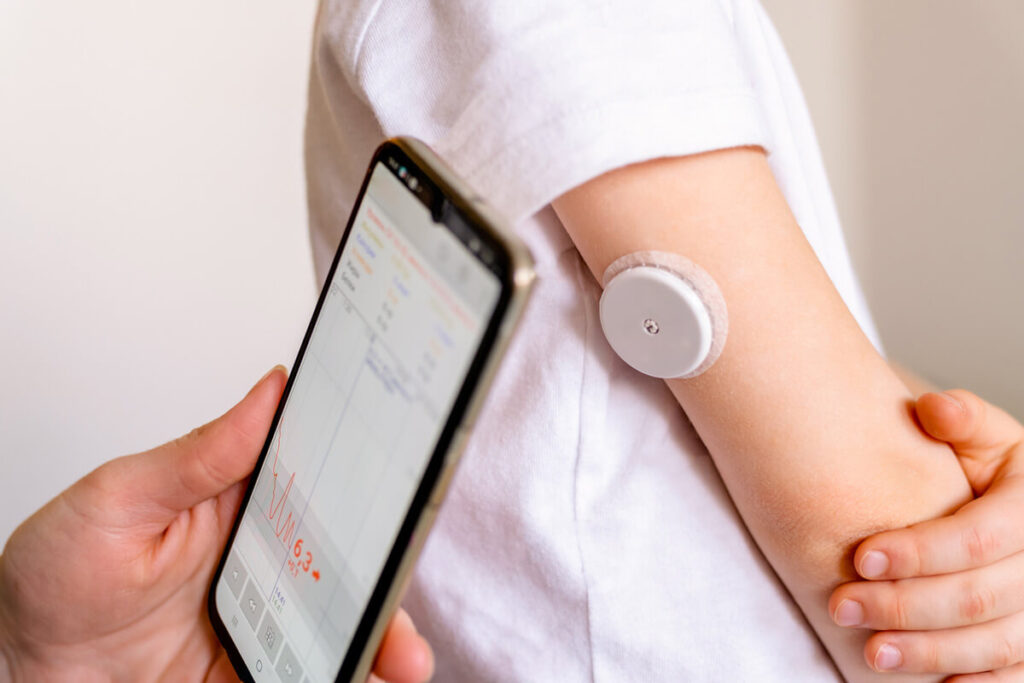
Personal CGM devices are used by patients continuously to monitor their interstitial glucose levels and inform daily treatment decisions. This category is divided into two types:
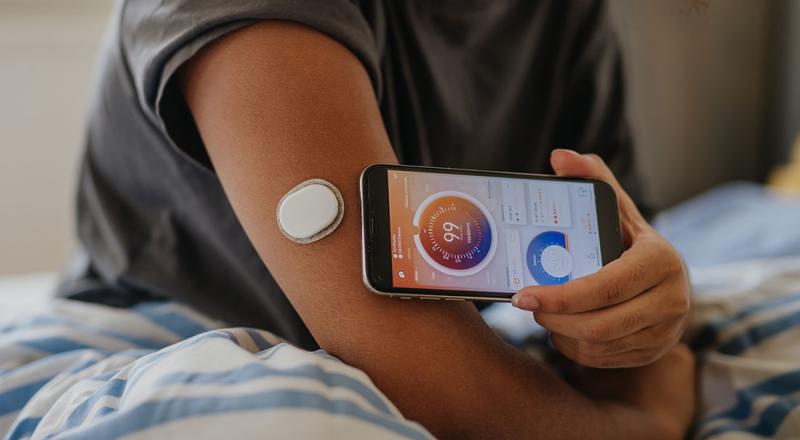
– Real-time CGM (rtCGM): these devices (such as the Dexcom G6) automatically transmit glucose data in numerical and graphical formats to a handheld reader or smartphone app.
Historically, rtCGM devices have held a significant safety advantage, offering automatic real-time alerts and alarms to warn users of impending out-of-range glucose levels.
– Flash CGM devices (such as the FreeStyle Libre 14-Day) require users to manually scan the sensor with their reader or smartphone to transfer data.
Although rtCGM initially offered superior alarm capabilities, the launch of the FreeStyle Libre 2 system in 2020 saw active safety alarms integrated into flash CGM systems. Recent large-scale real-world database studies analysing the IBM Explorys EHR and MarketScan datasets have demonstrated that rtCGM and flash CGM achieve comparable clinical outcomes (23-24). Head-to-head comparisons have shown that both systems facilitate similar reductions in HbA1c at six months post-initiation, and demonstrate equivalent event-free survival rates for acute diabetes events and all-cause hospitalisations in T1D and T2D populations.
Professional CGM consists of clinic-owned devices, such as the FreeStyle Libre Pro and Dexcom G6 Pro, which patients use intermittently. These can be operated in a “blinded” mode—where patients cannot see their data, allowing clinicians to objectively capture uninfluenced lifestyle habits—or an “unblinded” mode to help patients directly correlate their behaviors with glucose fluctuations. Professional CGM also helps generate the necessary documentation for long-term personal CGM insurance coverage.
Personalized Device Selection: Matching Patient Needs
Applying a “one size fits all” approach to prescribing CGM can negatively impact patient adherence and clinical outcomes. Healthcare providers must assess three fundamental questions:
- Is it clinically indicated?
- Does it address the patient’s clinical requirements?
- Does it meet their personal preferences?
For patients treated with intensive insulin management or those at an elevated risk of severe hypoglycemia, devices featuring active and predictive alarms—such as the Dexcom G6, Medtronic Guardian Sensor 3, and Senseonics Eversense XL—are highly beneficial. However, clinicians must be mindful of “alarm fatigue,” where frequent alerts cause patients to ignore warnings or abandon the technology. While many alarm thresholds can be customized to prevent this, regulatory agencies mandate an automatic, non-silenceable low alarm at 55 mg/dL on all applicable systems.
Patients using insulin pumps can opt for integrated CGM sensors that are compatible with modern automated insulin delivery systems, such as the Tandem Basal-IQ/Control-IQ, OmniPod 5 or MiniMed 770G. Alternatively, patients managing their diabetes via multiple daily injections can use connected “smart insulin pens” (such as the Medtronic InPen) and smart caps (such as the Bigfoot Unity), which allow users to seamlessly track dosages and receive CGM-informed dosing recommendations.
A major breakthrough in CGM usability is the non-adjunctive indication, which removes the requirement for regular confirmatory blood glucose monitoring through finger pricks for insulin dosing. This feature is currently available with the FreeStyle Libre 14-Day, FreeStyle Libre 2, Dexcom G6 and Eversense XL systems. Another vital consideration is sensor wear time, which ranges from 10 days for the Dexcom G6 to 14 days for the FreeStyle Libre devices, and up to 90 days for the surgically implanted Eversense XL. Providers must also factor in necessary sensor warm-up periods and out-of-pocket patient costs.
However, this perceived simplicity also sparked curiosity about the ring’s technical capabilities. Patients questioned how a device that looks like normal jewellery could gather accurate, reliable medical data. Participants expressed a strong desire for clarity on what metrics the device tracks, how data is extracted (e.g. via a Bluetooth connection to a computer) and whether they can easily interpret the results. Beyond simple data collection, they also saw the potential for the ring to act as a proactive safety mechanism. Several patients hoped that the device might feature a real-time alert function that could sound an alarm if it detected critical changes in their activity levels. Alongside these hopes, robust data security remained a top priority: patients wanted absolute assurance that their private health information would be securely stored and kept out of the hands of unauthorised parties.
Integrating CGM into Clinical Workflow
Before implementing CGM, healthcare providers should objectively assess their practice resources, including their own expertise in interpreting data, the availability of support staff such as diabetes educators, and their billing capacity.
Clinical integration generally follows a tiered progression of complexity:
– Introductory: initiating professional CGM (blinded or unblinded), primarily for patients with type 2 diabetes on non-intensive therapies. This requires basic retrospective data interpretation skills from the provider.
– Basic: utilising personal CGM with base functions (preset or off alarms) for patients on basal-bolus therapies. Staff may be required for initial device instruction.
– Intermediate: expanding to personal CGM with enhanced functions (active alarms). Providers will train patients to interpret rate-of-change trend arrows in order to make daily real-time insulin adjustments.
– Advanced: managing automated insulin delivery systems. This requires high proficiency in interpreting retrospective pump data and dedicated clinic staff for complex data downloading, billing and providing technical patient instruction.

As CGM technologies continue to broaden the range of available options, patients are increasingly able to choose devices that align with their individual lifestyles and needs.
Primary care clinicians, in turn, can enhance patient care by developing a strong understanding of device functionalities and thoughtfully planning how to integrate CGM into routine clinical practice.
References
- National Institute for Health and Care Excellence. Type 1 diabetes in adults: diagnosis and management. 2015. https://www.niceorguk/guidance/ng17. (accessed February 2, 2018).
- American Diabetes Association. 6. Glycemic targets: standards of medical care in diabetes—2018. Diabetes Care 2018;41(Suppl 1):S55–S64.
- Borot S, Benhamou PY, Atlan C, et al.: Practical implementation, education and interpretation guidelines for continuous glucose monitoring: a French position statement. Diabetes Metab 2018;44:61–72.
- Danne T, Nimri R, Battelino T, et al.: International consensus on use of continuous glucose monitoring. Diabetes Care 2017;40:1631–1640.
- Fonseca VA, Grunberger G, Anhalt H, et al.: Continuous glucose monitoring: a consensus conference of the American Association of Clinical Endocrinologists and American College of Endocrinology. Endocr Pract 2016;22:1008–1021.
- Peters AL, Ahmann AJ, Battelino T, et al.: Diabetes technology—continuous subcutaneous insulin infusion therapy and continuous glucose monitoring in adults: an Endocrine Society clinical practice guideline. J Clin Endocrinol Metab 2016;101:3922–3937.
- Lind M, Polonsky W, Hirsch IB: Continuous glucose monitoring vs conventional therapy for glycemic control in adults with type 1 diabetes treated with multiple daily insulin injections: the GOLD randomized clinical trial. JAMA 2017;317:379–387.
- Aleppo G, Ruedy KJ, Riddlesworth TD, et al.: REPLACEBG: a randomized trial comparing continuous glucose monitoring with and without routine blood glucose monitoring in adults with well-controlled type 1 diabetes. Diabetes Care 2017;40:538–545.
- Beck RW, Riddlesworth T, Ruedy K, et al.: Effect of continuous glucose monitoring on glycemic control in adults with type 1 diabetes using insulin injections: the DIAMOND randomized clinical trial. JAMA 2017;317: 371–378.
- Beck RW, Riddlesworth TD, Ruedy K, et al.: Continuous glucose monitoring versus usual care in patients with type 2 diabetes receiving multiple daily insulin injections: a randomized trial. Ann Intern Med 2017;167: 365–374.
- S ˇ oupal J, Petruzelkova´ L, Grunberger G, et al.: Glycemic outcomes in adults with T1D are impacted more by continuous glucose monitoring than by insulin delivery method: 3 years of follow-up from the COMISAIR study. Diabetes Care 2020;43:37–43.
- Beck RW, Riddlesworth TD, Ruedy K, et al.: Effect of initiating use of an insulin pump in adults with type 1 diabetes using multiple daily insulin injections and continuous glucose monitoring (DIAMOND): a multicentre, randomised controlled trial. Lancet Diabetes Endocrinol 2017;5:700–708.
- Vigersky RA, Fonda SJ, Chellappa M, et al.: Short- and long-term effects of real-time continuous glucose monitoring in patients with type 2 diabetes. Diabetes Care 2012; 35:32–38.
- Majithia AR, Kusiak CM, Lee AA, et al.: Glycemic outcomes in adults with type 2 diabetes participating in a continuous glucose monitor–driven virtual diabetes clinic: prospective trial. J Med Internet Res 2020;22:e21778.
- Bergenstal RM, Layne JE, Zisser H, et al.: Remote application and use of real-time continuous glucose monitoring by adults with type 2 diabetes in a virtual diabetes clinic. Diabetes Technol Ther 2021;23:128–132.
- Gehlaut RR, Dogbey GY, Schwartz FL, et al.: Hypoglycemia in type 2 diabetes—more common than you think: a continuous glucose monitoring study. J Diabetes Sci Technol 2015;9999–1005.
- Ruedy KJ, Parkin CG, Riddlesworth TD, et al.: Continuous glucose monitoring in older adults with type 1 and type 2 diabetes using multiple daily injections of insulin: results from the DIAMOND trial. J Diabetes Sci Technol 2017;11:1138–1146.
- S ˇ oupal J, Petruzelkova´ L, Flekac M, et al.: Comparison of different treatment modalities for type 1 diabetes, including sensor-augmented insulin regimens, in 52 weeks of followup: a COMISAIR study. Diabetes Technol Ther 2016;18:532–538.
- Bolinder J, Antuna R, Geelhoed-Duijvestijn P, et al.: Novel glucose-sensing technology and hypoglycemia in type 1 diabetes: a multicentre, non-masked, randomised controlled trial. Lancet 2016;388:2254–2263.
- Oskarsson P, Antuna R, Geelhoed-Duijvestijn P, et al.: Impact of flash glucose monitoring on hypoglycaemia in adults with type 1 diabetes managed with multiple daily injection therapy: a pre-specified subgroup analysis of the IMPACT randomised controlled trial. Diabetologia 2018;61:539–550.
- Haak T, Hanaire H, Ajjan R, et al.: Use of flash glucose sensing technology for 12 months as a replacement for blood glucose monitoring in insulin-treated type 2 diabetes. Diabetes Ther 2017;8:573–586.
- Haak T, Hanaire H, Ajjan R, et al.: Flash glucose-sensing technology as a replacement for blood glucose monitoring for the management of insulin-treated type 2 diabetes: a multicenter, open-label randomized controlled trial. Diabetes Ther 2017;8:55–73.
- Miller E, Joseph JM, Reyes IJ, et al.: A Comparison of Continuous Glucose Monitors in Reducing A1c in Type 1 and Type 2 Diabetes: FreeStyle Libre and Dexcom. Poster Presentation. American Diabetes Association 81th Scientific Sessions. Virtual Meeting, 2021. 67-LB.
- Hirsch IB, Roberts GJ, Joseph JM, et al.: Acute Diabetes Events and All-Cause Hospitalizations among Continuous Glucose Monitoring Device Recipients with Type 1 and Type 2 Diabetes: A Comparison of FreeStyle Libre and Dexcom. Poster Presentation. American Diabetes Association 81th Scientific Sessions. Virtual Meeting, 2021. 68-LB
- Laura Avogaro from FRESCI
- No Comments